Golden and Noble Works
“A wife too should regard her duties in the same light, as she suckles the child, rocks and bathes it, and cares for it in other ways; and as she busies herself with other duties and renders help and obedience to her husband. These are truly golden and noble works."
Martin Luther
Tuesday, February 19, 2013
Lenten Project for Children
If you're looking for ways to get children to give or think about others through Lent this may be helpful. I came across these ideas in our local newspaper.
Using Christ's words from Matthew 25:
Week One: "I was hungry." Children can collect canned good for a local food pantry.
Week Two: "I was thirsty." Collect can or bottles of juice for food pantry.
Week Three: "I was a stranger." Write cards or letters to residents in area nursing homes or retirement centers.
Week Four: "I was naked." Contribute diapers, wipes or baby care products and clothing to a local women's or homeless shelter.
Week Five: "I was sick." Donate health products such as shampoo, soap, lotions, toothbrushes and tooth paste to a food pantry or shelter.
Week Six: "I was in prison." Donate paper products, tissues, toilet paper, napkins and paper plates.
Friday, September 14, 2012
Blessed Holy Cross Day
Towering o’er the wrecks of time;
All the light of sacred story
Gathers round its head sublime.
Hopes deceive, and fears annoy,
Never shall the cross forsake me,
Lo! it glows with peace and joy.
Light and love upon my way,
From the cross the radiance streaming
Adds more luster to the day.
By the cross are sanctified;
Peace is there that knows no measure,
Joys that through all time abide.
Towering o’er the wrecks of time;
All the light of sacred story
Gathers round its head sublime.
Friday, April 29, 2011
Easter at My House - Aubri H.
Here are some pictures of Easter at our house. I really like having this Resurrection set. I never thought of getting one before but my girls love looking at it. I always enjoy putting out my Nativity set at Christmas but it didn't occurred to me to have something like this for Easter. I'm glad I got it!
I didn't get around to making the "natural" dyes this year. It required a little more work than I ended up having time for. But I had fun with the regular Paas dyes.
And tried decoupage on blown out eggs. I was inspired by Martha Stewart's eggs here, but unfortunately all of Martha's projects I try, always turn out a little less than stellar. I guess we can't all be Ms. Stewart.Wednesday, April 27, 2011
Easter at My House - Kathy F.
During Holy Week next year (starting on Monday) open 2 eggs, read the Bible verses together as a family, reflect on the meaning while looking at the symbols included. On Holy Saturday, open egg # 11 and then on Easter Sunday open #12 in the same manner. This is small thing to do, but it can bring much meaning to this special time of year.
Egg Number 1
Message: Jesus rode into Jerusalem on a donkey. The people waved palm branches.
Passage: Matthew 21:1-11.
Item: pretend palm leaf
Message: Judas betrayed Jesus for 30 pieces of silver.
Passage: Matthew 27:3 Matthew 26: 14-16
Item: Three dimes
Message: Jesus ate the Last Supper with His disciples.
Passage: Matthew 26:17-19 Mark 14: 22-25
Item: A small piece of cracker to represent the passover bread and grapes for wine
Egg Number 4
Message: Jesus praying in the Garden of Gethsemene
Passage: Mark 14:32
Item: praying hands
Egg Number 5
Message: the rooster crows 3 times and Jesus being bound and led away by the soldiers
Passage: Matthew 26:34 and Matthew 27:2
Item: feather and knotted rope
Egg Number 6
Message: Soldiers placed a crown of thorns on Jesus' head.
Passage: John 19:2-3 Matt 27:29
Item: A small thorny branch
Egg Number 7
Message: Jesus carried His cross.
Passage: John 19:17.
Item: small crucifix
Message: Jesus was nailed to a cross and pierced in His side.
Passage: John 19:18, 37 and John 20:25-29
Item: A nail
Message: Soldiers parted Jesus' garments and cast lots for His coat.
Passage: John 19:23-24
Item: Miniature dice
Message: They gave Jesus vinegar mixed with gall on a sponge to drink.
Passage: Matthew 27:34 and 48
Item: A sponge with vinegar
Message: The stone covering His tomb and Spices to prepare Jesus’ body
Passage: Matthew 27: 59-60 and Mark 16: 1
Item: rock and spices
Egg Number 12
Message: The tomb is empty. He has risen!
Passage: Luke 24:6 Matt 28:1-6
Item: Nothing
If you would like to share something your family did for Holy Week or Easter weekend, please let me (Aubri) know!
Monday, April 25, 2011
Easter at My House - Kristi L.
Here are some pictures Kristi shared from her family's Easter celebrations. I thought it would be a fun series of posts, so if you would like to share something from your week please let me know! Above is her Easter Resurrection set.
And Easter rice crispy bars she and her daughter made using colored, flavored marshmallows.And something I meant to post on Sunday but didn't get around to. Kristi found this Easter sermon by Pastor William Cwirla, you can read it here.
Saturday, April 23, 2011
The Seven Last Words of Christ - IV

THE SEVENTH WORD FROM THE CROSS
“Father, into thy hands I commend my spirit” (Luke 23:46).
The parting words of Jesus were taken from Scripture.” Psalm 31:5 says, “ Into thine hand I commit my spirit.” After the torment of betrayal by one of His own, the anguish of denial by another of His own, after mockery and abuse, a crown of thorns and suffering, after being forsaken by God, and enduring the throes of death His was nevertheless a peaceful death! The measure of our affliction in life can never measure up to that of our Lord, yet just because He suffered more than we could ever have endured, we are bold to say, “Lord give us such a death as this.”
As children of God we may be confident that measured in terms of our relationship to God, ours will be a peaceful death. Our Savior has reconciled us to God. As we are reconciled to God through the death of Jesus, we have nothing to fear from God. No matter how violent our death may be, no matter how fierce the struggle may be between life and death, our heart can be at peace. Our Lord Jesus promised us “whosoever believeth in Him should not perish, but have everlasting life” (John 3:16). Further He said, “My sheep hear my voice, and I know them, and they follow me: And I give unto them eternal life; and they shall never perish, neither shall any man pluck them out of my hand. My Father, which gave them me, is greater than all; and no man is able to pluck them out of my Father's hand” (John 10:27-29). With these promises in heart the Apostle Paul said, “I know whom I have believed, and am persuaded that he is able to keep that which I have committed unto Him against that day” (2 Tim 1:12). Amidst all the noise and raucousness of our ungodly age, the believer in Jesus can join with the martyr, Stephen (Acts 7) who said, “Lord Jesus receive my spirit,” and John Huss who before He was burned at the stake, said, “But I commit my soul into Thy hands; Thou hast redeemed me, Lord Jesus, God of Truth”, and finally Martin Luther who lying on his death bed said “I pass away; I yield up my spirit. Father into Thy hands I commend my spirit, Thou hast redeemed me, Lord, Thou faithful God.” Such a confession we may confidently make because our Lord Jesus having fulfilled all for our salvation commended Himself, and with Himself all His members to the hands of the Father in Heaven for which reason we may say,
In Thine arms I rest me,
Foes who would molest me
Cannot harm me here
(The Lutheran Hymnal-347).
Courtesy the Church of the Lutheran Confession
Friday, April 22, 2011
The Seven Last Words of Christ - III

THE SIXTH WORD FROM THE CROSS
“It is finished” (John 19:30)
“It is finished.” With reference to our text, the Greek Lexicon offers for the particular verb form of the word “finished” the following interpretation: “Everything has been accomplished which by the appointment of the Father as revealed in the Scriptures I must do and bear” (Thayer).
Everything foretold about, and necessary for our salvation is complete! With reference to the attainment of the promised eternal salvation, no works, no penance, no blood, no money “ nothing!- is necessary unless one does not believe what “finished” means. As comforting as it is to believe that Jesus has paid the full price for our salvation when He died upon the cross, so sad is it when people remain comfortless and burdened because they believe that they have to complete what Jesus already called complete.
Our Savior Jesus Christ said to His disciples, “Behold, we go up to Jerusalem, and all things that are written by the prophets concerning the Son of man shall be accomplished” (Luke 18:31). “It is finished” tells us that Jesus is true to His Word. We, the redeemed who believe the Word of Christ, and trust in His once-for- all completed atonement are numbered among those to whom Psalm 22 makes reference. “A seed shall serve him; it shall be accounted to the Lord for a generation. They shall come, and shall declare his righteousness unto a people that shall be born, that he hath done this” (Psalm 22:30-31).
Wilhelm Besser wrote in The Passion Story, “They who waste their energy in labor designed to add to or complete the work of Christ, they who, instead of accepting in faith the work of God that justifies the ungodly, they create a Savior according to their own fancy who is to make the virtuous more righteous, or to make penitent sinners gradually purer. They destroy for themselves the blessed message: “It is finished!”“ The faith that saves is not built upon personal effort, however sincere, to pridefully try to complete what Christ called complete, as if Christ actually did not complete what He said He did. They make of Christ a liar. Being people of flesh and blood who “daily sin much” the penitent sinner relieves an accusing conscience, not by trying harder to do what he can never do or even has to do, but by simply believing “It is finished!” In so believing the child of God respects the Word, and gives Christ and His cross due honor.
In this context Luther said, “ My penitent tears do not justify me. Christ alone has taken my sins away. He cast them into the sea of forgetfulness. This is my defense, a defense which rests upon: ‘It is finished.’”
People who appreciate art do not add another brush-stroke to the painting of a master. It is unthinkable. Why then should the sinner for whom Jesus died, and in whose behalf He declared, “It is finished,” even entertain the idea that the accomplishment of his salvation calls for an addition to what the Master has declared complete?
“For by grace are ye saved through faith; and that not of yourselves: it is the gift of God: Not of works…” (Ephesians 2:8-9). Thank God!
Thursday, April 21, 2011
The Seven Last Words of Christ - II

THE FOURTH WORD FROM THE CROSS
“And about the ninth hour Jesus cried with a loud voice, saying, Eli, Eli, lama sabachthani? that is to say, My God, my God, why hast thou forsaken me”(Matthew 27:46)?
When we consider the seven words of Christ from on the cross, we cannot but be amazed at the richness of the blessings that flow to us from Him. It is truly a hard heart that cannot be crushed by what we see or be softened by what we hear as Jesus hung on the cross. That is no less true of the 4th Word that our Savior spoke.
The reality of the Father’s love in promising a Savior is overwhelming to the penitent who knows what was lost by the sin of Adam and Eve, and who recognizes the on-going nature of sin in one’s own life. The manner of His conception of the Holy Ghost and birth of the Virgin Mary is no less overwhelming because it is so contrary to nature. But we believe the miracle, and gladly so for it declares to us that Jesus is without sin. That He should bear the sins of the world and suffer for all people is beyond reason. But one of the most overwhelming events, and some of the most incomprehensible words recorded in the Scriptures are these spoken by Jesus from the cross in mid-afternoon. It was at three o’clock in the afternoon, the very hour when the lambs for the evening sacrifice were slain that Jesus said, “Eli, Eli, lama sabachthani? that is to say, My God, my God, why hast thou forsaken me?”
If there is nothing else that strikes the penitent sinner with the enormity of sin, surely it is these words that express the forsakenness of Jesus by His Father. There is no hell on
earth when we understand what hell is. There may be things on earth that mimic hell, but hell in the real sense is being forsaken by God. Being forsaken of God is the epitome of punishment. God is not in hell, nor can those in hell call upon God. The Father forsook His Son! Who can grasp it? Penitent sinners cannot grasp it but are thankful that that is the way it was. Much less can the denier of Christ to whom the preaching of the cross is foolishness understand it (1 Corinthians 1:18).
The question of Jesus underscores the reality of His suffering and shame. What He endured was not a charade. It was real! In the very question we can appreciate the severity of what it is from which we have been delivered. The answer to the “Why” of Jesus lies in the Father’s determinate will to spare sinful man from the dreadfulness of eternal condemnation. For us, it is not a flippant proposition of “Better He than we.” Nevertheless the blessed truth is that because Jesus suffered it, none who believe in His meritorious atonement will suffer it. Having been reconciled to God through the merit of the Lord Jesus we have peace with God. We still cannot fathom it, but as Christians we in faith believe that the Father forsook His Son in order that all who believe might have the daily assurance in life and at the moment of death, that the Father will not forsake us.
Thanks be to God the Father, and to His Son, our Savior Jesus Christ, and to the Spirit for giving us the faith to believe what is beyond comprehension.”
THE FIFTH WORD FROM THE CROSS
“I thirst” (John 19:28).
“I am weary of my crying: my throat is dried: mine eyes fail while I wait for my God. And hide not thy face from thy servant; for I am in trouble: hear me speedily” (Psalm 69:3,17). “My soul thirsts for God, for the living God: when shall I come and appear before God” (Ps 42:2)? “I am poured out like water, and all my bones are out of joint: my heart is like wax; it is melted in the midst of my bowels. My strength is dried up like a potsherd; and my tongue cleaves to my jaws; and thou hast brought me into the dust of death” (Ps 22:14-15). If we want to know the enormity of our sin, we need only to sit at the foot of the cross, and recognize that the words above from the Psalms are a reflection of what our Savior suffered. When originally offered the drink of myrrh and gall that would have alleviated His suffering and hastened His death, Jesus refused to receive it. He must be in full control of His senses to drink the cup of suffering to its fullest, for only by doing so could He satisfy the demands of the Law which pronounced death upon the sinner. To have done less would have left fallen man still under condemnation of eternal death with all its indescribable horror and suffering. But when He had endured it all, and had fully paid the price, the Son of God desired to see His Father. He was ready to die. It was His time, the time selected by Him. Unto the end Jesus remained in control of all things in order that the Scriptures might be fulfilled. “They gave me also gall for my meat; and in my thirst they gave me vinegar to drink” (Psalm 69:21).
Now He said, “I THIRST.” The thirst that He felt was not uncommon for someone in His circumstance. A parched throat oft times accompanies death. But His thirst was more than a dry throat. He thirsts for those for whom He died to come to Him and drink of the refreshing water of salvation. By prophecy Isaiah 53 says, “He shall see of the travail of his soul, and shall be satisfied” After the toil of His soul, the Savior finds satisfaction in every soul that has been redeemed, and that has by faith grasped salvation in Him. Each time that we hear this word, “I thirst” we should appreciate what it is that He suffered, and at the same time daily bring Him satisfaction through our word and action, as well as our living faith and hope. In that manner we declare that Jesus did not thirst in vain. May we satisfy the thirst of the Savior by saying with David, “I stretch forth my hands unto thee: my soul thirsts after thee, as a thirsty land” (Ps 143:6).Wednesday, April 20, 2011
The Seven Last Words of Christ - I
Courtesy The Church of the Lutheran Confession
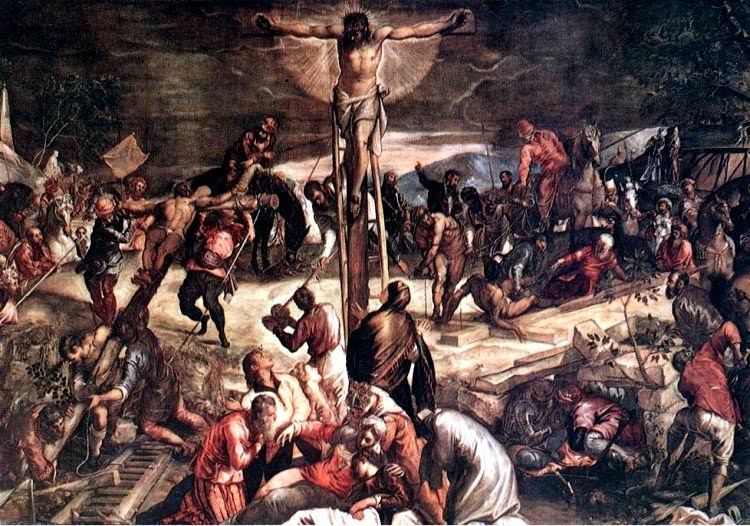
THE FIRST WORD FROM THE CROSS
“Father, forgive them, for they know not what they do” (Luke 23:34).
Throughout His trial Jesus did not complain. He did not strike back with His tongue at the evil that was hurled at Him. He was silent, except when it was necessary to witness to the truth or proclaim the honor of God. Yet upon the cross, when the die was cast He spoke treasured words. The first words were words of intercession. But for whom were they spoken? They were spoken for the betrayer and the denier. They were spoken for the soldiers who had taken Him in the garden as well as for those who had borne false witness against Him. They were spoken for the High Priest and the crowd that called for His crucifixion. Included were Pilate and Herod, and finally those who crucified Him and mocked Him at the cross.
Even as He prayed He witnessed to His relationship to God. He called Him, “Father.” He did not say to the people at the cross, “I forgive you.” The offenses against Him were directed at the Father who had sent Him. He implored the Father to forgive them, and thus showed that He had not come into the world to condemn the world, but that the world through Him might be saved.
The cross of torment and death was the cross of love. We sing in a hymn, “The King of love my Shepherd is.” Never was such love shown by one person for so many as when the Savior God, having taken the sins of mankind on Himself, died to validate the very prayer that He spoke, “Father, forgive them, for they know not what they do.”
But this all sounds so abstract to many. Furthermore, of what importance are the words spoken by Jesus Christ two millennia ago? Today the issues are race relations, the economy, the impending war, taxes, social welfare and equality and a myriad of other things. Who cares about what Christ said so long ago?
In response let us recognize that those words were spoken for us and for all people. When the crowd cried “crucify Him” Jesus” response was “Forgive them, Father.” In the face of the world’s blasphemy, Jesus says, “Forgive them.” When our conscience cries out against us because we have transgressed, Jesus” words still echo across the centuries, “Father forgive them.” The message of the Gospel is that where there is forgiveness of sins there is also life and salvation. All who recognize the terrible burden of sin and its eternal consequence are thankful for the price Jesus paid for which reason the Father graciously forgives our sin.
THE SECOND WORD FROM THE CROSS:
“Verily I say unto thee, Today shalt thou be with me in paradise” (Luke 23:43).
“And when they were come to the place, which is called Calvary, there they crucified him, and the malefactors, one on the right hand, and the other on the left” (Luke 23:33). Around the cross were representatives of all kinds of people. Thee were the proud, the self-righteous, the scoffers and mockers. There were people sympathetic to Jesus. They were all there by choice. And then there were some who were not there by choice. They were two others suffering the same punishment as Jesus, though for different reason. They were malefactors who were not there by choice, but whose life choices put them in this circumstance. The one criminal mocked Jesus from the cross. He died with cursing on his lips. What a horrible way to die! But there was the other who was won by the power of the cross. He had heard the first word of Jesus in which Jesus implored the Father to forgive his crucifiers. “And he said unto Jesus, Lord, remember me when thou comest into thy kingdom” (Luke 23: 42). We often speak cynically about condemned criminals who repent on death row. No doubt there are some who do confess the Lord without meaning it when they are confronted with death, in other words they do it for effect. But we should be careful about such judgment.
The criminal who was facing death hanging alongside Jesus spoke from the heart. He confessed his sin and unworthiness. Luther* said, “In the Garden He (Jesus) was comforted by an angel, on the cross by a murderer hanging beside Him. How strange that God should let His Son be comforted by a murderer.” There is joy in heaven over one sinner that repents.
Jesus’ response is a comfort to us. This man did not plead his works or any righteousness of his own. How could he? He had wasted away his life in crime and was now receiving the just reward of his deeds. “The wages of sin is death” (Romans 6: 23). If ever there was a strong commentary on the fact that salvation is by grace through faith without the deeds of the Law here is one. The gift of salvation is not earned. It is given. Jesus said to the penitent thief, “Verily I say unto thee, Today shalt thou be with me in paradise.” The Lord had said, “And I, if I be lifted up from the earth, will draw all men unto me” (John 12:32). Through Jesus’ word to this man, He declared the penitent thief to be one who was drawn to Him.
What a way to die! “Today you will be with me in paradise.” Analyze those words. Today with Jesus. in paradise. How blessed is the death of the saints; how great the breadth and depth of the grace of God! Let us not wonder how this evil man could be shown such grace. But let us thank God that grace is so rich to even include him, for then it will include us whose sins against the Lord are every bit as dark, even if not as spectacular. One church father* wrote, “I do not ask for the measure of Paul’s grace. I ask not for Peter’s portion; but I fervently beg to receive what Thou on the cross didst bestow on the malefactor.” On our last day how blessed we will be as we cling to the cross of Jesus from which will come to us these gracious words, “Verily I say unto thee, Today shalt thou be with me in paradise.” *Quoted in “The Passion Story”- Wilhelm Besser
THE THIRD WORD FROM THE CROSS
“When Jesus therefore saw his mother, and the disciple standing by, whom he loved, he saith unto his mother, Woman, behold thy son! Then saith he to the disciple, Behold thy mother! And from that hour that disciple took her unto his own home” (John 19:26-27).
As Jesus hung upon the cross there were many who hung around the cross. Besides His friends of whom there were fewer, there were the mockers and scoffers. The sight of Jesus hanging upon the cross, as well as the sound of evil voices mocking her Son surely brought to Mary’s mind the prophecy of Simeon. Simeon had said to Mary, “ And Simeon blessed them, and said unto Mary his mother, Behold, this child is set for the fall and rising again of many in Israel; and for a sign which shall be spoken against; (Yea, a sword shall pierce through thy own soul also,) that the thoughts of many hearts may be revealed” (Luke 2:34-35). The name “Mary” means, “bitter.” Here at the cross she tasted the bitterness of the helplessness of a mother who could neither take the place of Her Son nor alleviate His suffering.
But greater than the mother-love of Mary is the love of her Son, whom she also knew as her Savior. For she had said in the Magnificat “My spirit hath rejoiced in God my Savior” (Luke 2:47). Neither she nor we have ever been called upon to exercise sacrificial love to the extent Jesus did. Yet in the midst of His suffering there is exhibited what the Scriptures record, “Having loved His own which were in the world, He loved them unto the end” (John 13:1). In His last hours, He did not forget His mother but provided a protector for her. The Savior provided her with another “son.” He saith unto his mother, “Woman, behold thy son!” Jesus called her “woman” and not “mother” because He would have her think of Him in relation to her atonement by Him rather than in a narrower familial relationship. Mary could lean on John as a son. But the concern was to be mutual. John too, as the disciple “ whom Jesus loved” was also in need of support. “Then saith He to the disciple (John), Behold thy mother! And from that hour that disciple took her unto his own home.”
In these words, first of all, we learn that our welfare is the constant and abiding concern of our Savior. He knows our pain and sorrow, even in His own. He did not die on the cross in our place to forgive us our sin and win heaven for us only then to forget us while we are waiting for the eternal dawn. Here He also helps us to appreciate that He helps and strengthens, and encourages us through one another. We do not live on an island. At the cross we learn to appreciate the mutual love and care that exists within a fellowship, as well as the responsibility that members of the body of Christ are to have for one another. If in His deepest suffering He loved His own so much that He would provide for their mutual welfare, how also ought we to care for and love one another, and thus reflect Jesus’ love whereby He has loved us all!Image 1
Image 2
Image 3
Thursday, April 14, 2011
More Ideas for Holy Week and Easter
I'm an "idea hoarder". I like collecting good ideas for using or saving for future use. With all the good ways to celebrate Easter flying around here I thought I'd share some others that I've come across.
Just so you know, many of my sources are Roman Catholic but with some discretion I still find them useful.
Holy Week
Stations of The Cross coloring pages
Lenten or Good Friday Cross made of sticks, very easy!
Good Friday Hot Cross Buns recipe
More ideas for Holy Week here
Palm Sunday
Make Palm Crosses
Make a Palm Branch craft for children
More fun ideas for Palm Sunday here
Easter
Eggs:
"Jesus Eggs"
Resurrection Eggs
Eating:
Empty Tomb Rolls
More food here
Decorating:
Easter Tree (reading Scripture verses, start this 2 weeks before Easter)
Alleluia Tree
Alleluia Banner (nice idea to have "buried" it during Lent then bring it out for display at Easter)
Do any of you continue celebrating Easter throughout the entire 50 days of the Easter Season? If so, what do you do?
Thursday, April 7, 2011
Easter Approaches!

Holy Week and Easter are coming up and I have been thinking about different ways to commemorate and celebrate this time with my family.
For Palm Sunday I wanted to try making small crosses out of palm branches that my girls could wear to church. I think little things like this are good for teaching children. But I don't have a lot planned for the rest of Holy Week other than making Hot Cross Buns for Good Friday and going to our evening services.
I've thought about Maundy Thursday being a day to show love for others. I read on the LCMS website that one custom was to carry gifts to the poor in baskets on that day. With that in mind I could come up with several things we could do on this day in our community or for members in our church.
For Easter Sunday in our home, our Lenten countdown crown of thorns "calendar" (sorry, I can't think of what else to call it) will be donned with white flowers and purple will be replaced with white to visually mark the change in season. I will have Easter baskets for my children (no, the Easter Bunny doesn't come to our house, just his baskets full of treats!) and a special meal prepared, but do any of you find that this particular Sunday is exhausting? Especially for your pastor husband? I always look forward to it and dread it a little to be honest. Probably because I'm married to an introvert who just wants to *nap after church AND I have tiny kiddos that tend to make the simplest events much more difficult than I'd thought! But even so, I want to do something special on this festive day.
So, what does your family do during Holy Week and Easter? I'd love to hear about your traditions!
*My husband has three service on Easter morning, 6:30, 9 and 10:30....he deserves a nap!
Wednesday, March 9, 2011
Praying the Litany Daily During Lent

Kristi wanted to share this post from Steadfast Lutherans with all of us.
From the post:
Pastor Matthew Harrison, president of The Lutheran Church—Missouri Synod has extended a wonderful invitation and word of encouragement to us all: pray the Litany every day in Lent. I’d add to this, if you can, to do so on your knees.This is a wonderful practice for any of you desiring to "add something" (verses "give up something" which is fine as well) during Lent. The post provides a history of the Litany and a printable version of it.
Good find Kristi! Thank you for sharing it with us.
Monday, March 7, 2011
Preparing for Lent

With Ash Wednesday just two days away I've been thinking about ways my family can observe the season of Lent. Though my children are 2 1/2 and under I still feel that it is very important to begin now some of the traditions I hope to continue as they grow older.
I have enjoyed following the new blog: http://churchyearinthehome.blogspot.com/
It is an excellent resource for ways to commemorate and celebrate days in our church calendar that very easily slip by unnoticed. (Please don't think I'm advocating that EVERY day in our calendar should be remembered, that's not really practical and I would never say they MUST be. I only think it can be good, useful and enjoyable at times to do so.)
So getting to my point. I think the author has supplied a great list (here) on ways to observe Lent this year with your family. I plan on using some of her suggestions.
I'd love to hear some of the ways you observe this season!